Archivos - Página 3
-

Gestión Pública post COVID-19: las Asociaciones Público-Privadas como herramienta para el mejoramiento de los servicios y la infraestructura
Núm. 79 (2020)“La transformación de lo público y las alianzas público-privadas.”
La crisis generada por la pandemia supuso un punto de quiebre en las estructuras globales, un reto a los esquemas tradicionales desde donde se desarrollan todas las actividades; el trabajo, el estudio, la salud, el turismo, la movilidad, nueve meses después de experimentar cambios, algunos radicales, se han tenido retomado la mayoría de las dinámicas, transformadas, pero entendiendo como la quietud del confinamiento no es opción para los sistemas (económicos y sociales) que también han encontrado en los espacios digitales una oportunidad de adaptación.
Es por eso que los análisis empiezan a denotar como ante ese futuro cambiante proyectado, existe una verdadera oportunidad de transformar todos los espacios incluida la gestión de lo público; “la nueva normalidad post COVID-19 debe aspirar por un balance entre la dimensión ambiental, la dimensión humana y la dimensión económica, conciliando necesidades actuales con las necesidades de futuras generaciones” (López, 2020)1,especialmente, es necesaria una reflexión desde este ámbito, pues aunque en la mayoría de los casos, se ha respondido como se ha podido a la crisis de salud y las siguientes tensiones económicas y sociales, en realidad no parece que exista una lógica estratégica en la respuesta que permita aprovechar las nuevas dinámicas, aunque en ciertos temas, como consecuencia del empuje y la urgencia se han producido convergencias y avances (por ejemplo con las implementación del teletrabajo o las lecciones virtuales), estos son procesos complejos y no se pueden transformar de un momento a otro.
De la misma forma, esa incertidumbre del futuro y las soluciones urgentes que han requerido los ciudadanos, ha regresado a la conversación esa tradicional concepción de Estado como proveedor -o protector- de servicios básicos; la salud, la educación, y trabajo etc, Una visión que supone se deben ofrecer soluciones rápidas y eficaces a los individuos, para François Heisbourg (2020)2, la pandemia, ha reforzado el papel de “protector” de amenazas externas, en esta visión el Estado tiende a asumir compromisos internos, y por lo tanto se le exigen soluciones prontas que puede ser no esté en capacidad de asumir.
El punto es que muchas veces las respuestas estatales pueden llegar tarde, por eso es indispensable aprovechar las coyunturas para actualizar esa lectura de la gestión pública y cómo se puede perfeccionar constantemente, en este caso, una herramienta cada vez más implementada como catalizador de mejora, es la aplicación de modelos de asociaciones público-privadas (APP) para ofrecer soluciones a las nuevas y transformadas necesidades de los ciudadanos.
Tal como lo recalca el Banco Mundial “una cooperación saludable con el sector privado será más importante que nunca a medida que los países salgan de esta crisis con aún más restricciones fiscales”3, la colaboración público-privada, ya era importante, pero en el panorama post pandemia supone un mecanismo clave para crear soluciones y aumentar los niveles de servicios públicos.
Sin embargo, este tipo de colaboración, implementada de diversas formas y con resultados desde exitosos hasta fallidos, encuentra un factor de cambio en la inmediatez con la que se deben generar las respuestas actuales, por eso si las APP ofrecen una forma más rápida, concentrada y eficiente de hacer gestión de lo público, sus cualidades y debilidades deben ser estudiadas y evaluadas, con una visión puesta en la práctica, que permita aprender de estas dinámicas y sus mecanismos de aplicación.
Porque en muchos casos, este tipo de asociaciones son una forma de hacer frente limitaciones, ya sean presupuestarias, de recursos humanos o cualquier otro tipo que tienen las administraciones públicas, pero a su vez requieren un alto compromiso de los actores involucrados y no pueden tomarse a la ligera, sino más bien como una formula compleja, la cual requiere una combinación técnica idónea e interdisciplinaria. Lo que lleva al análisis de los marcos normativos, pues algunos países han demostrado tener habilitado el marco de referencia para el desarrollo de este tipo de esquemas, pero aun así no es suficiente para la cantidad de actores e intereses involucrados y la especificidad de cada intervención, sumado a que de la crisis actual se puede desprender una tendencias descendientes en la rentabilidad de los proyectos, probablemente se generen impactos negativos en el desarrollo de infraestructura o en el despliegue de servicios, de modo que es relevante mantener un debate casi permanente en este tema.
El interés general de este acercamiento es proponer análisis y documentar la forma en que estos esquemas de colaboración se pueden desarrollar de manera más continua en medio de una dinámica global cambiante, que apuesta por la innovación y donde la función del Estado también se ha transformado, en aras de una aplicación que favorezca la generación de valor público.
La presente edición de la Revista Centroamericana de Administración Pública ofrece un primer acercamiento a algunos de los elementos teóricos y prácticos de las asociaciones público-privadas en la región y de los sectores donde estas pueden tener más impacto, como el de infraestructura o transporte, proponiendo este número como un punto de encuentro entre lo teórico, lo normativo y lo práctico.
-
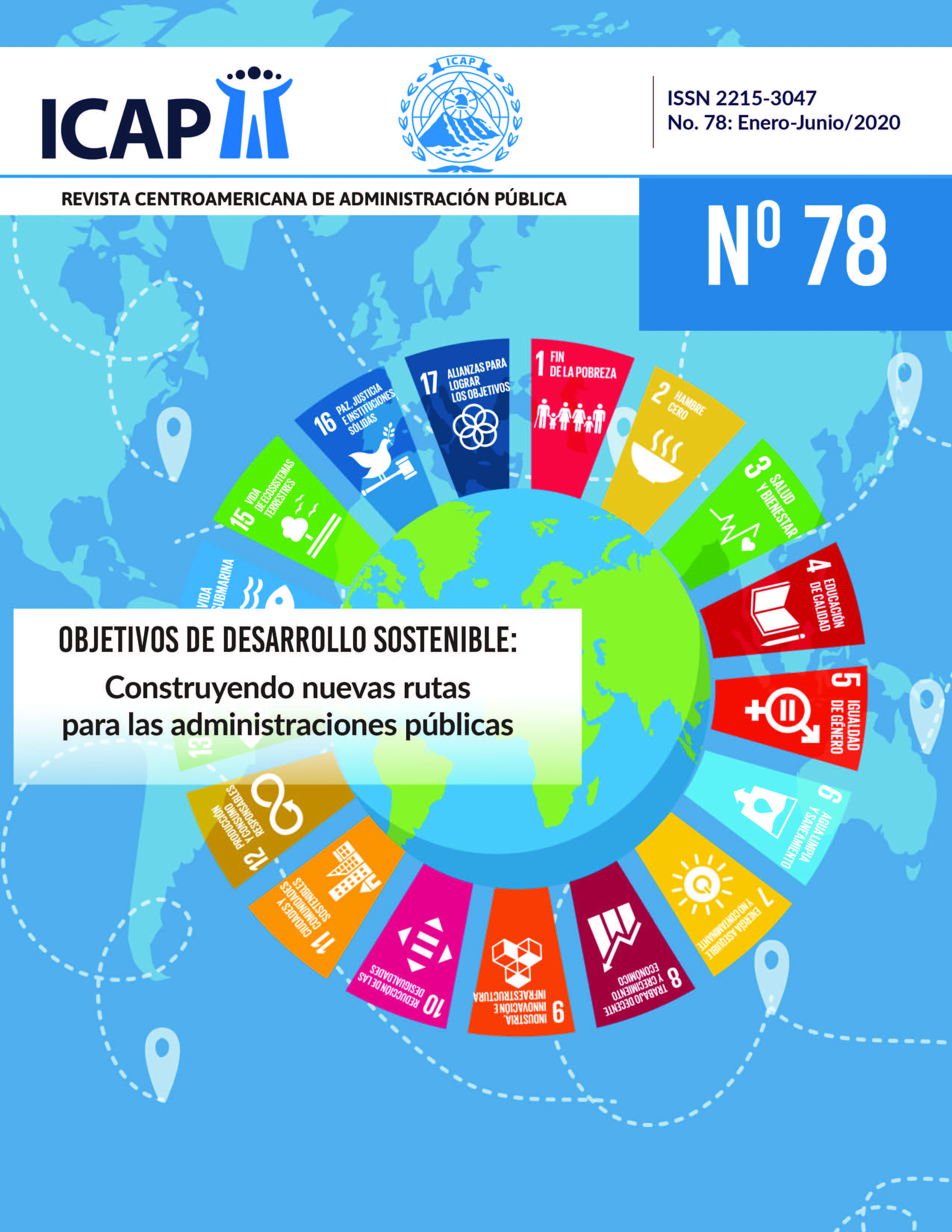
OBJETIVOS DE DESARROLLO SOSTENIBLE: Construyendo nuevas rutas para las administraciones públicas
Núm. 78 (2020)Cuando el Comité Editorial determinó el contenido del volumen 78 de la Revista Centroamericana de Administración Pública, nadie imaginó en ese momento la pandemia mundial que se iba a generar desde la ciudad de Wuhan en China.
Hoy sabemos que el COVID-19 ha alcanzado a toda la humanidad y si muchos calificaron esta emergencia como una crisis sanitaria, hoy no cabe duda que es una crisis social en la plenitud del término. Abarca la economía, el medio ambiente y las estructuras de poder de cada país. Este, y no otro, es el entorno social y político que estamos viviendo en América Latina y el Caribe y que no podemos ignorar.
Por lo tanto, es válido preguntarse para el período post-CDV-19: ¿Qué tipo de sociedad emergerá? ¿Cómo se transformarán los gobiernos y las administraciones públicas? ¿Habrá convergencia en las políticas de desarrollo de los países o se acentuarán las divergencias? Son preguntas profundas con las que los estudiosos de la sociedad y la gestión gubernamental tienen que lidiar.
Porque si la Agenda 2030, que contiene los Objetivos de Desarrollo Sostenible (ODS), es una hoja de ruta para la lucha global contra la pobreza, el cambio climático y la desigualdad, hoy tenemos que admitir que esta Agenda debe ser revisada a la luz de las nuevas circunstancias. El mundo está cambiando rápidamente y aún no somos capaces de prever lo que nos depara el futuro.
En este sentido, me gustaría ofrecer tres reflexiones que podrían arrojar algo de luz sobre el debate en curso; la primera es que los diecisiete ODS deben ser necesariamente reformulados o, en todo caso, debe priorizarse su implementación. En esta línea, y en consonancia con la propuesta de autores especialistas en desarrollo y lo expresado por los propios organismos internacionales, la acción colaborativa del Estado y la sociedad debe centrarse en lo básico: agua, salud y alimentación.
Dado que la crisis posterior a la crisis del 19 está sacudiendo los cimientos de la convivencia y la armonía social, hay que atender lo primero. Lo cual se justifica si consideramos que con estos tres ámbitos de actuación cubrimos carencias que no esperan y que son vectores de enfermedades infecciosas y contagiosas, además de otras mortales.
Está claro que los más desprotegidos, sin defensas, mal alimentados, sin agua y saneamiento, o los que carecen de cobertura sanitaria universal, tanto física como mental, o la protección del medio ambiente no pueden esperar hasta 2030, por lo que las acciones tendrán que ser, además de urgentes, extremadamente precisas.
Como prueba de ello, veamos el inevitable empobrecimiento de las clases medias y el descenso de los pobres a la pobreza extrema. La tasa de desempleo ya ha comenzado a aumentar, como consecuencia del declive de las actividades productivas, lo que hará que en América Latina, por ejemplo, se pase de 185 a 220 millones de pobres a finales de este año.
Es probable que el hambre vuelva a aumentar en Asia, África y América Latina. A los problemas endémicos de la guerra, los enfrentamientos civiles, el cambio climático y la escasez de agua, hay que añadir la pandemia que está provocando la ruptura de los sistemas alimentarios y la reducción de los programas de ayuda internacional, en muchos casos. Además de la alteración de las cadenas de producción, transporte y distribución como consecuencia de la necesidad de minimizar el contagio y, por tanto, la aplicación de restricciones de movimiento y aislamiento obligatorio.
La segunda reflexión tiene que ver con la evaluación del aprendizaje social en la lucha contra la pobreza. Tras décadas de políticas públicas con plena o escasa participación de los Estados, deberíamos haber aprendido algunas lecciones. Y, para ser francos y directos, la gran mayoría de estas políticas y los cuantiosos recursos que se han utilizado simplemente no han dado los resultados esperados. Obviamente, ha llegado el momento de revisar profundamente los supuestos e instrumentos de las políticas tradicionales.
La cuestión del aprendizaje social para el desarrollo está vinculada a la de la gestión del conocimiento, que ha sido la piedra angular del trabajo del ICAP en los últimos años y que puede detectarse en el pensamiento y las acciones de su director y colaboradores. Así, la crisis puede, y debe, dar lugar al fortalecimiento de la investigación y la formación de los responsables de superar las carencias de los países de nuestra región.
La valorización del conocimiento acumulado en la formulación y ejecución de políticas públicas y la construcción de escenarios en el nuevo mundo "DC" (después de la COVID-19) se evidencia en la publicación del dossier institucional con medios de audio, que nuestra institución ha realizado bajo el título "Políticas Públicas en el mundo post COVID 19" y que puede ser consultado y descargado en este enlace.
Por último, y como sostenía el recordado economista del desarrollo Albert O. Hirschman (1915-2012) en su prolífica producción, el trabajo de los intelectuales comprometidos con el desarrollo debe ser siempre el de un "posibilista "i . Es decir, alguien que, sin certezas absolutas, se propone pensar en lo que aún no existe porque tiene derecho a la libertad. La libertad de explorar destinos que no están previstos por las leyes de hierro de las ciencias sociales o por las certezas de los gurús del "desarrollo equilibrado".
Subrayo el pensamiento de Hirschman precisamente porque el lector tiene ante sí, en esta publicación, una colección de escritos de exploradores "posibilistas" que comparten con nosotros sus pensamientos y experiencias en el trabajo del desarrollo sostenible. Estas líneas surgen de las mentes y los espíritus de investigadores y empresarios sociales que aportan generosamente sus ideas y experiencias.
-
Cambiando la forma en que operan los gobiernos
Núm. 77 (2019)¿Cómo se presenta el futuro?, ¿cuáles serán los medios de comunicación en los próximos 50 años?,¿cuáles serán las responsabilidades de la administración pública en 2060?, el futuro no se puede predecir, por lo que estas interrogantes no tienen respuesta concreta; sin embargo, si se recolectaran datos, se generaran escenarios y posteriormente se presentaran a un grupo de expertos se podrían validar por lo menos algunas nociones, que permitirían a las administraciones públicas preparars para una mejor gestión de esos futuros inciertos, esas herramientas prospectivas son parte de la serie de procesos que si se empezaran a implementar hoy y podrían tener un impacto positivo en el futuro.
Los ciclos de cambio y ruptura nos han llevado a una realidad que está marcada por el avance tecnológico; los medios de comunicación, la fuerza laboral, las relaciones sociales, el comercio, el entretenimiento, la recolección de impuestos, los sistemas de salud y de transporte público, todos tienen componentes tecnológicos, la vida no se entiende sin tecnología.
Esto ha ocasionado que aparezcan nuevas necesidades, especialmente, porque el tejido social es cada vez más complejo, fragmentado y plural, aun así, la administración pública ha sido lenta para solventar las urgencias -nuevas y antiguas- y por esa falta de respuestas se ha ocasionado una crisis de expectativas, donde las sociedades tiene claro que encuentran soluciones inmediatas a sus nuevas necesidades y exigen cambio – o ruptura-.
Por eso, las administraciones públicas deben ser capaces de gestionar las expectativas y la incertidumbre de los individuos para generar capacidades de entendimiento intersectorial, interinstitucional e interactorial y por lo tanto construir soluciones colaborativas, proponiendo una salida constructiva a los retos complejos y problemas dinámicos.
Las brechas, no solo económicas, si no también etarias y tecnológicas, difuminan y acentúan las urgencias particulares a las que la administración pública debe hacer frente y el Estado por sí solo no puede, ni debería, intentar llenar todas esas necesidades, sino asegurar que los sistemas minimicen el impacto del cambio de una manera eficaz y eficiente.
La urgencia es la colaboración, en un panorama en continua transformación, donde se debe pretender que los intereses públicos de las empresas privadas y de los individuos, se coordinen y generen impactos significativos en la gestión de las expectativas; las alianzas público-privadas son una de las características necesarias para prever futuros y generar respuestas.
Es en ese panorama que la recopilación, el procesamiento, la gestión y transformación de datos en insumos con valor real a través de la Ciencia de Datos, supone una caja de herramientas para transformar entornos sociales y económicos, esto porque la gestión, transferencia y aplicabilidad del conocimiento debe funcionar como una alerta temprana, proponiendo medidas que en lugar de generar caos, propongan la tranquilidad de una respuesta responsable en un espacio de incertidumbre.
Los megadatos o Big Data; datos estructurados o no estructurados que producen tendencias sobre los usuarios de un sitio web deben funcionar como una brújula, que señales algunos pasos o tendencias que pueden ser de ayuda para generar soluciones.
Todo esto requiere que la administración pública ponga su mirada en esta tendencia y es que la generación de datos a nivel global está en un punto sin precedentes, según el Banco Mundial (2016), por día se comparten más de 803 millones de twits, 186 millones de fotos en Instagram, 152 millones de llamadas por Skype y se realizan 36 millones de compras por Amazon y estos datos, ni siquiera incluyen a China, uno de los países con mayor flujo de información y el mercado electrónico, más grande del mundo.
La Ciencia de datos debe entenderse como la herramienta capaz de producir evidencia pertinente, de calidad y oportuna para fundamentar y guiar la toma de decisiones en los procesos gubernamentales, empresariales o institucionales. Su utilización ha sido enfocada en el diagnóstico de problemas, análisis de coyuntura y generación de escenarios; en consecuencia, la aplicación de estos datos mejoraría el que hacer de los gobiernos y las administraciones públicas, a través de la generación de soluciones efectivas a problemas de salud, transporte, educación, vivienda, entre otros, así como la creación de escenarios que prevean situaciones o tendencias del futuro para así poder gestionar las incertidumbres de una manera más efectiva.
La aplicación de la Ciencia de Datos en la gestión gubernamental como una política de Estado es una necesidad del contexto actual, a partir de la construcción de escenarios, el uso de Big Data, la consolidación de procesos de gobierno abierto y la aplicación de la gran cantidad de herramientas tecnológicas para la función pública, además, de la toma de decisiones basadas en datos que faciliten y fomenten la toma de decisiones inteligentes y basadas en evidencia.
En una realidad que experimenta cada vez más cambios acelerados, el avance de la tecnología representa cada día mayores desafíos para las administraciones públicas por esta razón se debe reflexionar sobre su importancia y proponer como herramienta de avance. Esta coyuntura requiere que la administración pública, genere un nuevo concepto sobre su función y acepte que debe funcionar también como desarrollador, precursor e incluso regulador de este tipo de tecnología y estar dispuesta a asumir el reto, especialmente porque este no es un proceso sencillo y los límites -si es que los hay- para la acción gubernamental son difusos.
-
Los aprendizajes para el buen gobierno: la gestión del conocimiento en las políticas públicas fallidas
Núm. 76 (2019)Instituto Centroamericano de Administración Pública, con sede en San José, Costa Rica y un Centro de Innovación y Formación en Ciudad del Saber, Panamá. Publica temas de Administración Pública e Integración Centroamericana con el objetivo de promover una mejor comprensión de los asuntos gubernamentales, de la administración pública y de la integración del Istmo centroamericano; el contenido se encuentra dirigido a todas las corrientes del pensamiento administrativo, público y de la integración regional que abogan por el desarrollo de conocimientos en y sobre Centroamérica.
La Revista Centroamericana de Administración Pública requiere a los autores que concedan la propiedad de sus derechos de autor, para que su artículo y materiales sean reproducidos, publicados, editados, fijados, comunicados y transmitidos públicamente en cualquier forma o medio, así como su distribución en el número de ejemplares que se requieran y su comunicación pública, en cada una de sus modalidades, incluida su disposición al público a través de medios electrónicos, ópticos o de otra cualquier tecnología, para fines exclusivamente científicos, culturales, de difusión y sin fines de lucro.
-
La Alta Gestión Pública de los Centros de Gobierno
Núm. 75 (2018)La transformación, la actualización y la modernización son aspectos fundamentales para asegurar la innovación en el fortalecimiento de las capacidades institucionales de las instituciones públicas; contribuyendo a la construcción de un Estado ágil y dinámico, que brinde la capacidad de promover bienes y servicios públicos de calidad hacia las poblaciones. En tal sentido, a Revista Centroamericana de Administración Pública constituye un espacio especializado de reflexión, pensamiento y debate sobre una compleja diversidad de temas que inciden en la gobernabilidad y gobernanza de la región centroamericana.
Las demandas democráticas, requieren de una ingeniería de Estado y de un ejercicio de gobierno, que sean capaces de articular el complejo andamiaje institucional con la atención de prioridades y acciones, que vayan más allá de lo coyuntural y de la inmediatez. Estamos frente al desafío de integrar esquemas de gestión presidencial prospectiva y con una alta capacidad de construcción narrativa.
La edición de la Revista Centroamericana La Alta Gestión Pública de los Centros de Gobierno abre un abanico mayor de conceptos, enfoques y experiencias para la innovación de la gestión estratégica y prospectiva de los Centros de Gobierno; contribuyendo a un diálogo de alto nivel orientado al mejoramiento de la gobernabilidad y la gobernanza de los Estados miembros del Sistema de la Integración Centroamericana, como de América Latina en general.